
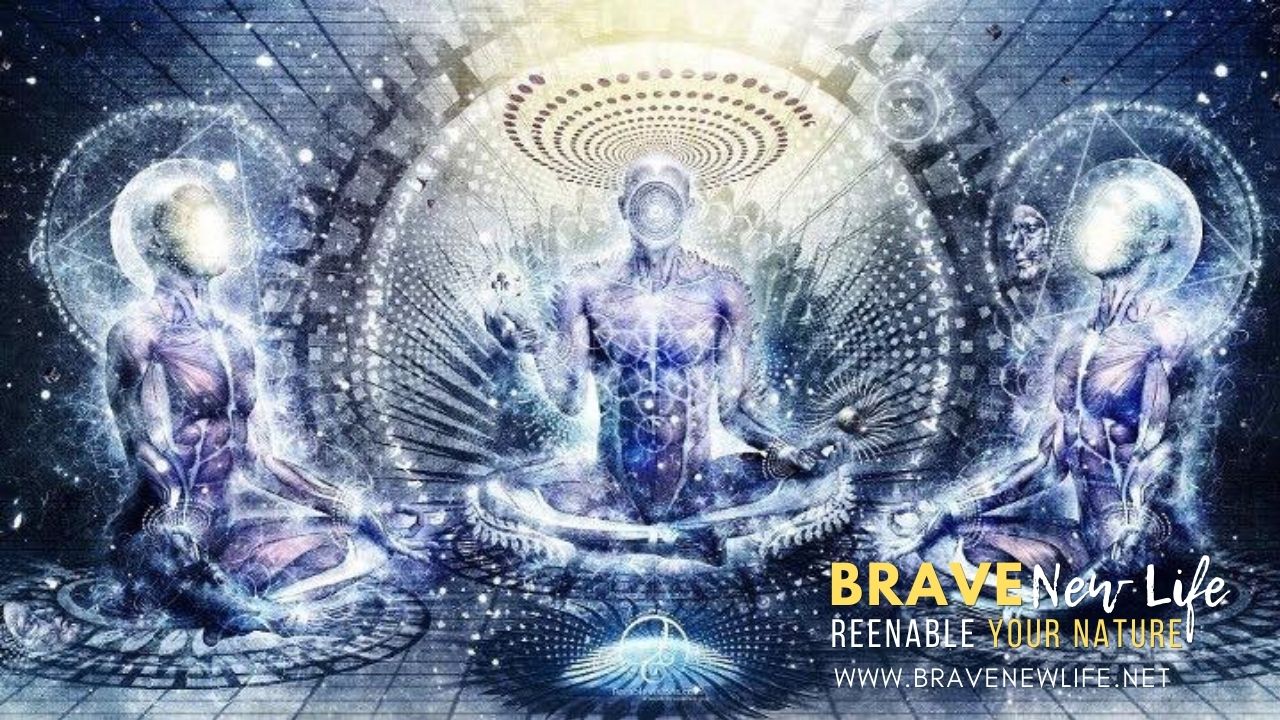
Many people arrive here out of a curiosity about cultural conditioning, the sense that some of what we’re taught doesn’t fully match lived experience. The deeper you look, the more you start questioning inherited beliefs and social patterns, and asking where they actually came from.
This is where the word Archon enters the picture. It comes from ancient Gnostic cosmology, texts and traditions that predate Christianity, in which Archons are described as lesser cosmic forces that distort or obscure a person’s connection to their own divine nature. It’s a rich, genuinely ancient body of thought, not something I invented.
If you want to go deeper into this history, I’d point you toward John Lamb Lash’s writing, which brought Gnostic Archon material into contemporary discussion. I’ll say plainly that his work sits well outside mainstream religious scholarship and is best read as one interpretive lens among many, not as settled fact.
Where I find this framework genuinely useful isn’t as an explanation of who’s “really in control” of the world, it’s as a metaphor for an internal process: the parts of our own conditioning, self-doubt, and inherited fear that can distort how we relate to ourselves and to life. Wetiko is another word from a different tradition (Algonquian) for a similar internal pattern, a kind of self-perpetuating, fear-based orientation.
The real work, as I see it, isn’t in accumulating more knowledge about where these patterns supposedly came from. It’s in the internal work of questioning our own fear-based reactions and gently transforming them, within our own minds, which is the only place this kind of pattern can actually be addressed.
In grace and aroha,
Continue reading: Sophia on Returning to Syntropy